Showing posts with label Unit 2. Show all posts

Wednesday, 29 January 2014

FMP Contextual - Michael Kenna

Michael Kenna

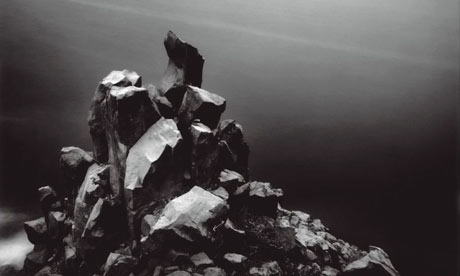
Michael Kenna is an English photographer best known for his black & white landscapes. Kenna's photography focuses on unusual landscapes with ethereal light achieved by photographing at dawn or at night with exposures of up to 10 hours. Since about 1986 he has mainly used Hasselblad medium format and Holga cameras and this accounts for the square format of most of his photographs. The main exception was for the photographs in Monique's Kindergarten for which a 4x5' large format camera was employed. 


I really like Kenna's photographs, so much so I will try using similar techniques (such as the long exposures and composition) in my landscape work. As well as this, I think Kenna has done a fantastic job of printing from his negatives to make smooth, yet high contrast black and white prints. The detail retained from using medium and large format film is great, I don't think the photographs would be anywhere near as interesting if the scenes were shot digitally, or even on 35mm film.


FMP Contextual - Saul Leiter

Saul Leiter was an American photographer and painter whose early work in the 1940s and 1950s was an important contribution to what came to be recognized as the New York School. Saul Leiter was born in Pittsburgh, Pennsylvania. His father was a well known Talmud scholar and Saul studied to become a Rabbi. His mother gave him a Detrola camera at age 12. At age 23, he left theology school and moved to New York City to become an artist. He had developed an early interest in painting and was fortunate to meet the Abstract Expressionist painter Richard Pousette-Dart. Pousette-Dart and W. Eugene Smith encouraged Leiter to pursue photography and he was soon taking black and white pictures with a 35 mm Leica, which he acquired for a few Eugene Smith prints. In 1948, he started taking color photographs. He began associating with other contemporary photographers such as Robert Frank and Diane Arbus and helped form what Jane Livingston has termed the New York School of photographers during the 1940s and 1950s. He died on the 26th of November 2013.0

I like that Saul Leiter seems to carefully compose his photographs, from the looks of things, he waits for the opportune moment to take the shot. I prefer this massively to artists like Joel Meyerowitz who seem to shoot randomly, making snapshots instead of photographs. Although I don't shoot people very often, I think the patience and consideration that Leiter uses can be used across all areas to improve my work.


FMP Contextual - Joel Meyerowitz

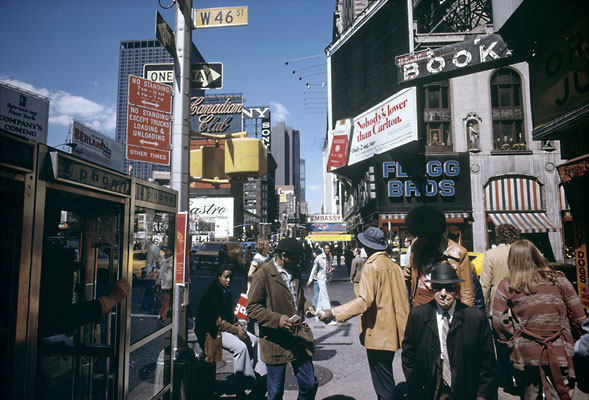
Joel Meyerowitz (born March 6, 1938) is a street photographer, and portrait and landscape photographer. He began photographing in color in 1962 and was an early advocate of the use of color during a time when there was significant resistance to the idea of color photography as serious art. In the early 1970s he taught the first color course at the Cooper Union in New York City where many of today's renowned color photographers studied with him.
Meyerowitz was inspired by seeing Robert Frank at work, Meyerowitz quit his job as an art director at an advertising agency and took to the streets of New York City with a 35mm camera and black-and-white film, alongside Garry Winogrand, Tony Ray-Jones, Lee Friedlander, Tod Papageorge and Diane Arbus. He drew inspiration from Henri Cartier-Bresson, Robert Frank and Eugène Atget — he has said "In the pantheon of greats there is Robert Frank and there is Atget." 
After alternating between black-and-white and color, Meyerowitz "permanently adopted color" in 1972, well before John Szarkowski's promotion in 1976 of color photography in an exhibition of work by the then little-known William Eggleston. Meyerowitz also switched at this time to large format, often using an 8×10 camera to produce photographs of places and people.
Personally, I don't really like the majority of Meyerowitz' work, most of it seems like snapshots. No consideration is apparent when he's shooting, the first two photographs are good examples, the subjects are all random, doing random things; there's no focus on any specific thing.


FMP Contextual - Ernst Haast


Haas wasn't interested in photography at an early age, but took advantage of his family’s extensive library, as well as museums and libraries in Vienna. This lead him to study philosophy and poetry, both of which started his interest of the creative potential for photography. 'A Poet's Camera' was one of the pieces which sparked his interested, it included work from artists like Edward Weston. Haas went on to work for 'Life' and was elected to Magnum's board of directors following the deaths of Robert Capa and Werner Bischof in 1954.
Here are some examples of Ernst's work.

Haas' work is all of a similar style, focusing on long exposures, making his subjects look almost dragged out. Although I think the concept is good, I'm not fond of Haas' work, his photographs are dull, and aren't appealing in my opinion. That being said, I can see why his work is popular, it is well shot, and an idea that has not been over used in popular photography. 


Tuesday, 28 January 2014

Units

Unit 1
The unit will develop the learner's knowledge, skills and understanding necessary for the confident application of visual language in a range of art and design activities.

Learning Outcomes
1 - Understand the characteristics of visual language in art and design
2 - Be able to apply visual language to a range of art and design activities

Assessment Criteria
1.1 - Critically compare, through experimental application, the characteristics of a wide range of visual language elements.
2.1 - Apply visual language, across a range of contexts, to influence appearance and meaning in art and design
2.2 Critically compare the use of visual language, across a range of contexts, to influence appearance and meaning in art and design.

Unit 2
This unit will provide the learner with an introduction to a range of research activities and related skills appropriate to the support of art and design. The unit will also develop and understanding of the vital role that research plays in informing and developing ideas.

Learning Outcomes
1 - Understand research tools, methods and skills
2 - Understand primary and secondary research sources
3 - Be able to use research tools, methods and skills to inform ideas for creative activities

Assessment Criteria
1.1 - Critically compare a range of research tools, methods and skills
2.1 - Critically compare a range of primary and secondary research sources
3.1 - Apply research tools, methods and skills to record and interpret information and develop ideas for creative activities
3.2 - Evaluate the effectiveness of research tools, methods and skills to develop ideas for creative activities

Unit 3
This unit will provide the learner with an awareness of the critical p perspectives and contextual frameworks that support practical activity in art and design.

Learning Outcomes
1 - Understand critical perspectives that influence the analysis of art and design activity
2 - Understand the contexts within which art and design is positioned

Assessment Criteria
1.1 - Critically compare a range of critical perspectives that influence the analysis of art and design
1.2 - Apply knowledge of critical perspectives to the analysis of a range of art and design activities
1.3 Apply knowledge and understanding of a range of critical perspectives to support own art and design practice
2.1 - Critically compare a range of contexts within which art and design is positioned
2.2 Apply an understanding of a range of contextual parameters to support own creative development

Unit 4
This unit will provide the learner with an introduction to a range of materials and processes used in art and design, their particular characteristics, and the related technical skills necessary to record experiences and articulate ideas.

Learning Outcomes
1 - Understand materials, processes and technical skills used in art and design

Assessment Criteria
1.1 - Critically compare a range of materials and processes used in art and design through experimental application
1.2 - Apply understanding of materials and processes to support own art and design activities
1.3 - Apply understanding of technical skills to support own art and design activities
1.4 - Evaluate the use of materials, processes and technical skills to own support art and design activities

Unit 5
This unit will develop the learner's ability to critically analyse and integrate research, contextual understanding, materials, methods and skills to solve 2 dimensional problems in art and design.

Learning Outcomes
1 - Be able to analyse and research a 2 dimensional problem in art and design
2 - Be able to use an integrated approach to 2 diminutional problem solving in art and design
3 - Be able to use evaluation to support solutions to problems in 2 dimensions in art and design

Assessment Criteria
1.1 - Analyse the requirements and parameters of a 2 dimensional problem in art and design
1.2 - Apply research activities to support solutions to a 2 dimensional problem in art and design
2.1 - Demonstrate the ability to plan, organise and prepare solutions to a 2 dimensional problem in art and design
2.2 - Apply practical skills, understanding and methods to solve 2 diminutional problems in art and design
3.1 - Analyse the effectiveness of solutions to 2 dimensional problems in art and design 

Thursday, 28 November 2013

FMP Contextual - Gary Winnogrand

Garry Winnogrand

Garry Winogrand was a street photographer, although I think his work is more social documentary based, best known for his portrayal of the United States in the mid-20th century. Winnogrand worked alongside Joel Meyerowitz, Lee Friedlander, Tod Papageorge and Diane Arbus in the 1960s, photographing the streets of New York.


Winnogrand's work looks really natural in my opinion, the subjects seem to be doing their day to day activity, instead of posing for a shot. I think this is one of the key features to his photography


FMP Contextual - Lee Friedlander

Lee Friedlander is an American photographer and artist. His most famous work was made in the 1960s and 70s, working primarily with 35mm cameras and black and white film. Friedlander seems to work primarily with social documentary and urban landscapes, producing contrasty black and white photographs


Here are some examples of Friedlander's work, personally I think Friedlander has captured an 'eerie' effect with his photographs, they look like there's more than first meets the eye (especially in his landscape photographs, like the one below). It is clear why Friedlander is as popular as he is, his work is quite unique. For example, the first of the three photographs below has really soft whites and greys, with a few bold black parts in the middle, instantly grabbing your attention and standing out from the rest of the surroundings.


FMP Contextual - Thomas Joshua Cooper

Thomas Joshua Cooper is an American photographer. He is considered 'amongst the premier contemporary landscape photographers'.
Cooper was inspired by the works of the photographers of the f/64 group of the 1930s and 1940s, such as Ansel Adams. Cooper states, "I'll live and die by the late works of Edward Weston, Alfred Stieglitz and Paul Strand, and I think Robert Frank is the most extraordinary living photographic picture-maker."
Cooper loves being a photographer, but is frustrated by some of the vocabulary that is used in the field. He indicates, "I hate the words "snap", "shoot" and "take" when it comes to making photographs. Everything I do is very seriously built up. They are 'made' pictures."
Not only a photographer, Cooper is a poet and has written haiku books. Most of them are inspired by nature and reflect his photography.

He currently resides in Glasgow, Scotland, where he founded the Fine Art Photography Department at the Glasgow School of Art in 1982. He is now a senior researcher in the faculty of Fine Art, holding a Professorial role and Head of Department. He is married to Catherine Alice Mooney and together they have two daughters, Laura Indigo Cooper and Sophie Alice Cooper.